The Same Seller, Twice
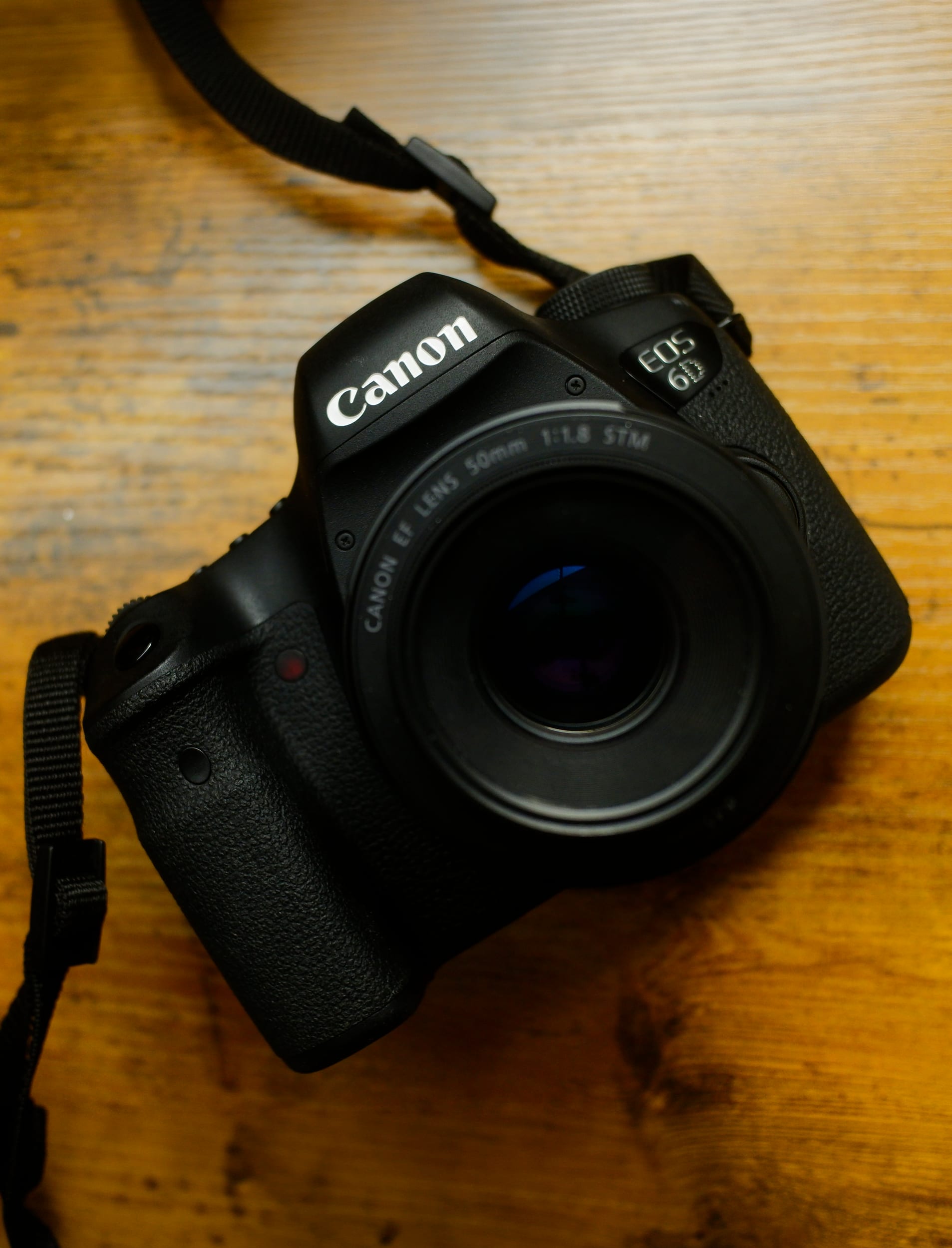
A few weeks after the Magic Drainpipe landed in my hands, the same OfferUp seller had a Canon 6D listed. That’s not a coincidence I was going to walk past. Sellers who actually take care of what they’re letting go of don’t show up often, and after how clean that 80-200mm turned out to be, I wanted to see what else this person had sitting around.
I’d been keeping half an eye on 6D listings elsewhere for a while, mostly out of curiosity. Prices generally landed somewhere between $350 and $500 depending on condition, which is a fine number for what the camera is, but more than I wanted to spend on something I mainly wanted to play around with. This one came in well under that. I ended up paying $210 for it.
A good part of why I trusted this purchase before I even saw the body in person came from the lens. The Magic Drainpipe showed up in excellent shape, glass clean, barrel tight, nothing about it feeling like it had been neglected. That was basically a reference check on this seller, run before I ever met them a second time.
Once I got the 6D home and started going through it, the first thing I wanted to know was the shutter count. It came back at roughly 6,600 actuations. For a full-frame body that’s now over a decade old, that’s barely used, and it lines up with everything else about it: close to new cosmetically, nothing that reads as heavily handled. A very clean, lightly used copy of a camera that’s old enough to vote in a few more states.

Chasing the 5D Feel, Not Just the Price
Price wasn’t the only reason I wanted this specific camera. Part of what pulled me toward the 6D is something I’d picked up from other people who’ve shot both it and the original 5D: that the 6D’s files and rendering feel closer to the classic 5D than you’d expect given how much sits between them on paper.
I want to be careful with that comparison rather than overstate it. The 5D Classic’s sensor is a 2005 design, the 6D’s is from 2012, and they’re not the same generation of anything technically. But the reputation isn’t nothing either. The 6D reads, in a lot of hands-on accounts, like Canon’s attempt at a modernized, more usable version of that original full-frame look, not a clean break from it. I already have a 5D Classic in my own kit, it’s one of the cameras that pulled me back into this hobby in the first place, so having something to actually shoot side by side with it mattered more to me here than the spec sheet did.
What the 6D Actually Was in 2012
Canon announced the 6D on September 17, 2012, and had it on shelves by the end of that year. It launched at $2,099 body-only, roughly $1,400 less than the 5D Mark III at the time. That gap wasn’t an accident. Canon built the 6D specifically to create a real, affordable entry point into full-frame shooting, not just an APS-C body with a bigger price tag.
It carried two genuine firsts for Canon: it was the company’s smallest and lightest full-frame DSLR at launch, and the first Canon DSLR with built-in Wi-Fi and GPS, no external accessory required to geotag a shot or sync the camera clock. Under the hood it’s a 20.2-megapixel full-frame sensor paired with a DIGIC 5+ processor, native ISO 100-25,600 expandable further in both directions, and shooting at around 4.5 frames per second. Body construction mixes magnesium alloy with polycarbonate, with some resistance to dust and light moisture built in, though it’s not sealed to the standard of the 5D Mark III or Canon’s 1-series bodies. Single SD card slot, no dual-card backup, which was already a notable omission for the era.
The Part That Doesn’t Add Up on Paper
Here’s the detail that actually makes this camera interesting beyond “old and cheap.” The 6D undercut the 5D Mark III by close to $1,400, and in one specific, testable way, it actually beat it. The 6D’s center autofocus point is rated down to -3 EV, a full stop more sensitive in low light than the 5D Mark III’s own center point at -2 EV. Independent high-ISO comparisons between the two bodies, particularly above ISO 6400 and in long-exposure work, found the 6D holding a slight but consistent edge in noise performance as well. It’s not a dramatic gap, most people wouldn’t spot it in a real photo, but it’s a real one, and it’s a strange thing for the cheaper camera in Canon’s own lineup that year to pull off against its pricier sibling.
That strength comes with a very specific trade-off, and it’s worth stating precisely rather than writing off the AF as simply bad. The 6D has 11 autofocus points total against the 5D Mark III’s 61, and only the center point is cross-type and gets that -3 EV rating. The ten outer points are considerably weaker, commonly cited around -0.5 EV, which in practice means low-light autofocus on this camera really means recompose off the center point, not “any point works in the dark.” That’s a real limitation for anything requiring off-center focus and low light at the same time. It’s not the same thing as the AF just being unreliable across the board.
Still a Workhorse in 2026
What’s kept the 6D in the conversation this long isn’t nostalgia, it’s that people are still actively re-litigating whether it holds up, and mostly landing on yes. A widely cited ten-year retrospective on the camera calls out battery life north of 1,500 shots per charge, reliable Canon color and skin tones, and a shooting experience deliberate enough that the author argues it makes you a more intentional photographer. It keeps showing up specifically in street and travel photography circles, where its small size and quiet operation get mentioned again and again as real advantages, not just a footnote. None of that comes without the same caveats already covered here: the AF array, the small raw buffer, the single card slot, and a fixed, modest-resolution rear screen are all dated by today’s standards, and every piece of that current coverage says so up front.
There’s also a reportedly good showing for the 6D in a couple of historical measures worth mentioning with the right amount of hedging: it’s said to have been named among DPReview’s most important cameras of the 2010s, and to have been the most commonly used body among Astronomy Photographer of the Year shortlist entrants for several years running. I haven’t independently confirmed either claim against the original source, so treat them as reported rather than settled, but they fit the same low-light, high-ISO reputation this camera has built everywhere else.
What Actually Feels Stripped Down
Handling the 6D more, I went back to something I’d said going into this purchase, that it was missing the control dial you get on the 5D Mark II and 5D Mark III. That’s not quite right, and I want to correct myself now that I’ve actually checked it against the body in front of me rather than just going on memory. The 6D does have the rear Quick Control Dial. What it doesn’t have is the separate joystick, the little Multi-controller lever both 5D siblings use to nudge the AF point around with your thumb. Canon built an 8-way pad into the center of the dial instead, more like what you’d find on a compact camera than a dedicated joystick. It works, but it’s slower than just rolling a joystick over with your thumb, and I noticed it most trying to pick an off-center AF point quickly.
That same “one thing removed” pattern shows up in a few other places once you go looking for it. The top plate has five buttons that each do a single job, where the 5D Mark III packs a dual-function button into that same row plus a dedicated M.Fn button that cycles through AF-point grouping, something the 6D doesn’t have at all. A couple of buttons on the left side of the top plate are gone entirely rather than just relocated. And the top plate itself is plastic instead of the magnesium alloy on the 5D Mark III, which sounds like corner-cutting until you remember the 6D is the first Canon body with a built-in Wi-Fi and GPS antenna baked into the shell. That plastic top is part of what made those antennas possible in the first place, not just a cheaper part for its own sake.
I’d braced for the menu system to be the weak point too, and that turned out to be the wrong thing to worry about. It’s the same menu Canon’s been running across this generation of bodies, organized the same sensible way, and there’s nothing confusing about navigating it. What’s actually different is what’s exposed inside it. HDR mode is JPEG-only here, where the 5D Mark III also gives you RAW, and the multi-exposure blend options are a couple of modes shorter. Same menu, fewer features living inside it. That’s a more accurate way to describe “stripped down” than blaming the menu itself, which isn’t really where this camera cuts corners.

None of this is a dealbreaker. It’s a reminder that Canon built the 6D to hit a price, and the control layout and feature list are where that shows up before the sensor ever does.
Final Thoughts
What I actually walked away with is a shutter count under 7,000 on a camera that’s been out of production for over a decade, from the same seller who’d already earned my trust once. I still haven’t put it side by side with the 5D Classic the way I want to, but that comparison is exactly what I was hoping to get out of this one, on top of a body that quietly does something its much pricier sibling couldn’t at launch. Eventually I want to take that further and run my own color-rendering comparison across the 5D Classic, the 5D Mark II, and this 6D, all three side by side rather than taking anyone else’s word for it. There’s already at least one video out there touching on that same comparison, but I’d rather see it with my own three bodies before I trust someone else’s read on it. For $210, that’s a find I’m glad showed up when it did.
